THC vs CBD for Insomnia: How Medical Marijuana May Improve Sleep
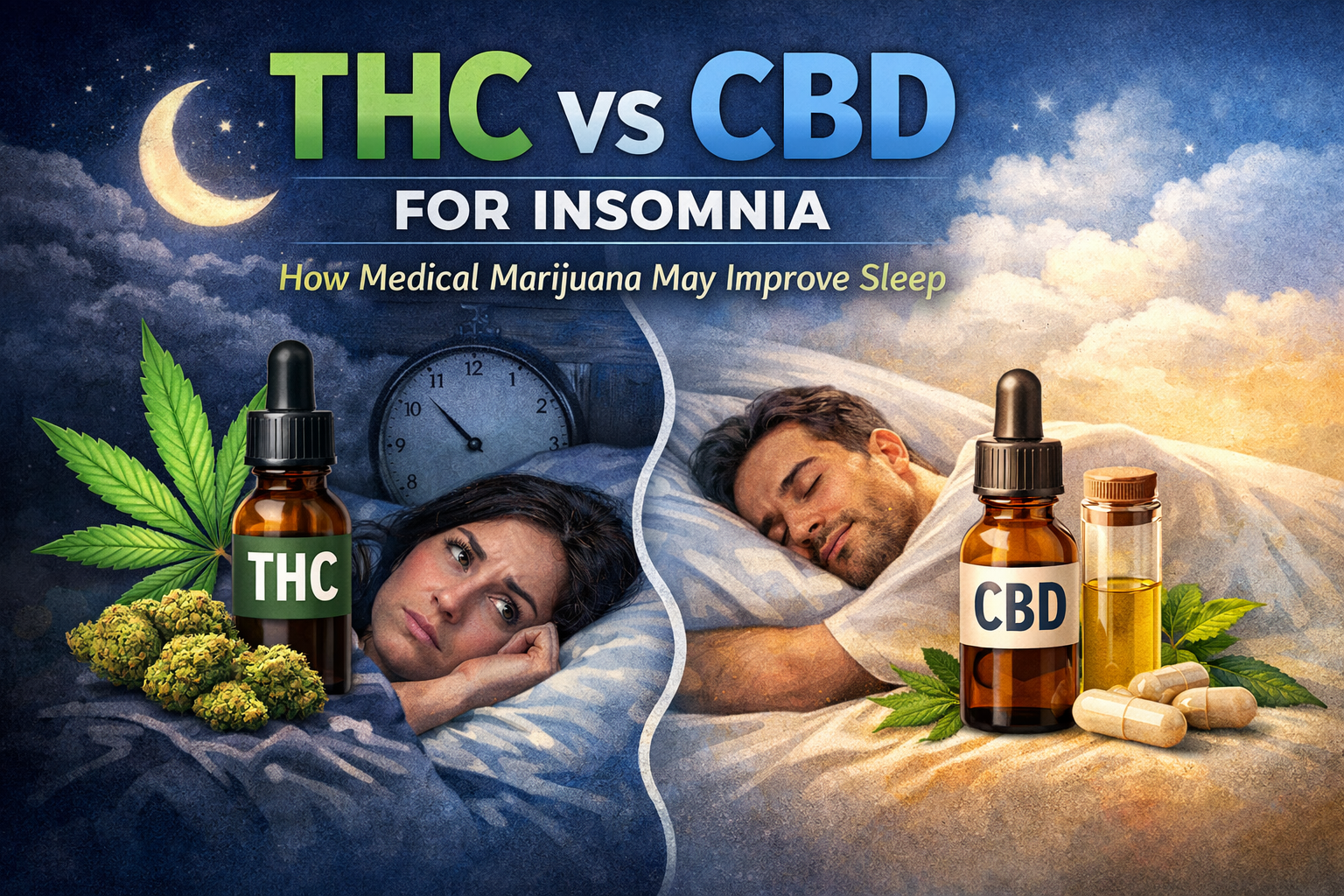
THC vs CBD for Insomnia: How Medical Marijuana May Improve Sleep
Insomnia isn’t just “trouble sleeping.” For many people, it’s a cycle of lying awake with a racing mind, waking up multiple times a night, or getting up too early and feeling exhausted all day. When lifestyle changes and common sleep aids aren’t enough, some patients ask a new question: can medical marijuana help? The answer is nuanced—because THC and CBD affect sleep differently, and the “right” option depends on what’s actually causing your insomnia.
This guide breaks down THC vs CBD for insomnia in a clear, patient-friendly way, including how each may impact sleep, who should be cautious, and how many medical cannabis patients approach dosing safely.
Understanding Insomnia: What’s Really Keeping You Up?
Insomnia can be short-term (a stressful week) or chronic (months or years). It often shows up as:
Sleep-onset insomnia: trouble falling asleep
Sleep-maintenance insomnia: waking up repeatedly
Early-morning awakening: waking too soon and can’t fall back asleep
Non-restorative sleep: “I slept, but I’m still tired”
Your “type” matters because cannabis may help some sleep issues more than others—especially when insomnia is tied to pain, anxiety, PTSD symptoms, restless thoughts, nausea, or certain neurologic conditions.
THC vs CBD: The Basics
THC (Tetrahydrocannabinol)
THC is the cannabinoid most associated with feeling “high.” Medically, patients often use THC for symptoms that interfere with sleep, such as pain, muscle tension, anxiety (in some people), nausea, and low appetite.
How THC may support sleep:
May reduce time to fall asleep (sleep latency)
May make it easier to stay asleep, especially when pain is the issue
Can create a sedating effect in moderate doses
Important trade-off: THC can also cause side effects that impact sleep quality—like next-day grogginess or vivid dreams when you stop using it.
CBD (Cannabidiol)
CBD is non-intoxicating. Many people use it for stress, inflammation, muscle soreness, and general calm.
How CBD may support sleep:
May help sleep indirectly by lowering anxiety, stress, or inflammation
Can reduce “wired but tired” feelings for some patients
Often easier to tolerate for people sensitive to THC
Important trade-off: CBD isn’t always sedating. Some people feel more alert at certain doses, especially when taken earlier in the day.
How THC Affects Sleep: Benefits and Risks
THC has a reputation as a “sleep aid,” but it’s more accurate to say it can knock down barriers to sleep, like pain or hyperarousal.
Potential Benefits of THC for Insomnia
Faster sleep onset: Many patients report falling asleep quicker with low-to-moderate THC.
Reduced nighttime awakenings: Especially when discomfort or chronic pain wakes you up.
Physical relaxation: Helpful if you feel tense, restless, or uncomfortable in bed.
The Downsides of THC for Sleep
THC isn’t a perfect solution, and the biggest issues tend to be:
Tolerance: With frequent use, the same THC dose may stop working. People may increase dosage and then feel more side effects.
Next-day impairment: “Weed hangover,” slower reaction time, mental fog.
Anxiety or paranoia in some individuals: Higher THC can worsen racing thoughts and panic, especially if you’re prone to anxiety.
REM sleep changes: THC may reduce REM sleep in some users. This can mean fewer dreams, but it can also affect how restorative sleep feels for certain people.
Rebound sleep issues: Stopping regular THC can cause temporary sleep disruption and vivid dreams.
How CBD Affects Sleep: When It Helps (and When It Doesn’t)
CBD is often described as calming, but its relationship with sleep is more “supportive” than sedating.
Potential Benefits of CBD for Insomnia
Stress and anxiety support: If your insomnia is fueled by worry, CBD may help your nervous system settle.
Inflammation and discomfort: Some people sleep better when inflammation and soreness are reduced.
Lower risk of impairment: CBD doesn’t cause intoxication and usually doesn’t create the same “heavy” next-day fog as THC.
The Downsides of CBD for Sleep
Not always a knockout: CBD may not help if your insomnia is severe or pain-driven without THC involvement.
Dose timing matters: Some people feel more awake at certain doses (especially low-to-moderate). Others feel sleepy at higher doses.
Product variability: CBD products can vary widely in quality and labeling accuracy depending on where you get them.
Which Is Better for Insomnia: THC or CBD?
Here’s a practical way to think about it:
THC may be a better fit if:
You can’t sleep because of pain, muscle spasms, or physical discomfort
You struggle primarily with falling asleep
You’ve tried non-THC options without success
You tolerate THC well (no anxiety/paranoia)
CBD may be a better fit if:
Your insomnia is driven by stress, anxiety, or a racing mind
You want a non-intoxicating option
You’re sensitive to THC or prone to panic
You need to minimize next-day impairment
Often, a balanced THC:CBD approach works best
Many patients find the “sweet spot” is not extreme THC or pure CBD—but a balanced ratio (like 1:1 or 2:1 CBD:THC) taken at a low dose. CBD can sometimes smooth out some THC side effects while still allowing THC to do the heavy lifting for sleep onset and pain relief.
Best Practices: Dosing and Timing (General Guidance)
Everyone’s tolerance and medical situation is different, so you should follow your clinician’s advice—but these are common “safer-use” principles many providers recommend:
1) Start low and go slow
With THC especially, start with a very small dose and increase gradually over multiple nights if needed. Too much THC can worsen anxiety or cause restless sleep.
2) Take it earlier than you think
Many patients do best when they take THC or a THC:CBD blend 1–3 hours before bed, depending on the form:
Inhaled (vape/flower): faster onset, shorter duration
Edibles: slower onset, longer duration (and easier to overdo)
Tinctures: somewhere in between, often easier to fine-tune
3) Don’t chase sedation every night
If you rely on heavy THC nightly, tolerance can build. Some people reduce tolerance risk by:
Using the lowest effective dose
Taking breaks (if medically appropriate)
Using CBD or non-cannabis sleep supports on alternate nights
Safety Notes and Who Should Be Cautious
Medical marijuana isn’t appropriate for everyone, especially for sleep. Be extra cautious (and talk to your provider) if you:
Have a history of panic attacks, severe anxiety, or psychosis
Are pregnant or breastfeeding
Have untreated sleep apnea (sedating substances can worsen breathing issues)
Take medications that may interact (sedatives, certain antidepressants, blood thinners, etc.)
Need to drive or operate machinery the next morning (THC can impair performance)
Avoid mixing THC with alcohol or other sedatives—that combination can increase impairment and risk.
What About Strains and Terpenes for Sleep?
Patients often hear that “indica is best for sleep,” but real-world effects depend more on cannabinoid dose, terpene profile, and your body than the strain name.
That said, many patients report better sleep outcomes with products that are:
THC-dominant in low doses, or balanced THC:CBD
Higher in potentially relaxing terpenes like myrcene, linalool, or beta-caryophyllene (when present)
The key is consistency and tracking: try one product at a time, record your results, and adjust slowly.
How to Choose the Right Approach for Your Insomnia
Before choosing THC, CBD, or a combination, ask yourself:
What’s the main cause of my insomnia? Pain, anxiety, frequent waking, nightmares, stress?
Do I need to avoid intoxication? Work schedule, parenting, safety concerns?
How sensitive am I to THC? Past experiences matter.
Am I using cannabis as a band-aid? If your sleep issue is from poor sleep hygiene or untreated medical problems, cannabis alone may not solve it.
For many patients, the best results come from combining medical guidance with:
Consistent sleep schedule
Reduced caffeine late day
Cooler, darker bedroom
Limiting screens before bed
Treating underlying pain/anxiety appropriately
Final Takeaway
THC may help insomnia by making it easier to fall asleep and stay asleep, especially when pain or physical discomfort is the main trigger—but it can cause tolerance, next-day fog, or anxiety at higher doses. CBD is non-intoxicating and may support sleep indirectly, particularly when stress and anxiety are the root issue, though it isn’t always sedating.
If you’re considering medical marijuana for insomnia, the safest path is to work with a qualified medical provider, start with low doses, track your response, and prioritize a plan that improves sleep without creating a dependency or impairing your next day.